It's a Visit.com !
It's independent
It's from the VB.com collection
The Barbarossa city of the Palatinate — medieval imperial roots, the Fritz Walter Stadium, one of Europe’s largest Japanese gardens and the vast Palatinate Forest at its doorstep.
Author of the image is EPei
Welcome to Visit Kaiserslautern.com, an independant Travel guide using the "Visit" branding style adopted by more and more private Tourist Guides, marketing-savvy Hotel organisations or official Convention and Visitors Bureau.
Kaiserslautern is a city shaped by medieval origins, military history, and the forested landscapes of the Palatinate, giving it an atmosphere that feels both grounded and quietly expansive. Its early development centered around the imperial palace built here in the Middle Ages, when the city served as a residence for Frederick Barbarossa. Remnants of this era, including sections of the palace and the old town layout, still anchor the historic center. Over the centuries, Kaiserslautern grew as a regional market town, with churches, squares, and fortifications reflecting its strategic position on important trade and military routes.
The 19th and 20th centuries brought significant transformation. Industrialization introduced textile mills, engineering works, and rail connections that reshaped the city’s economy and urban form. After the Second World War, Kaiserslautern became closely associated with the presence of U.S. military forces, which influenced its cultural life, demographics, and international connections. Modern districts, wide streets, and postwar architecture reflect this period of reconstruction and expansion, giving the city a pragmatic, contemporary character alongside its older layers.
Today, Kaiserslautern feels like a place where medieval foundations, industrial heritage, and forest landscapes coexist. Its blend of historic remnants, modern districts, and natural surroundings creates a city that is practical, resilient, and shaped by the interplay between tradition, transformation, and the vast greenery that frames it.
Visit Kaiserslautern with Expedia.com →
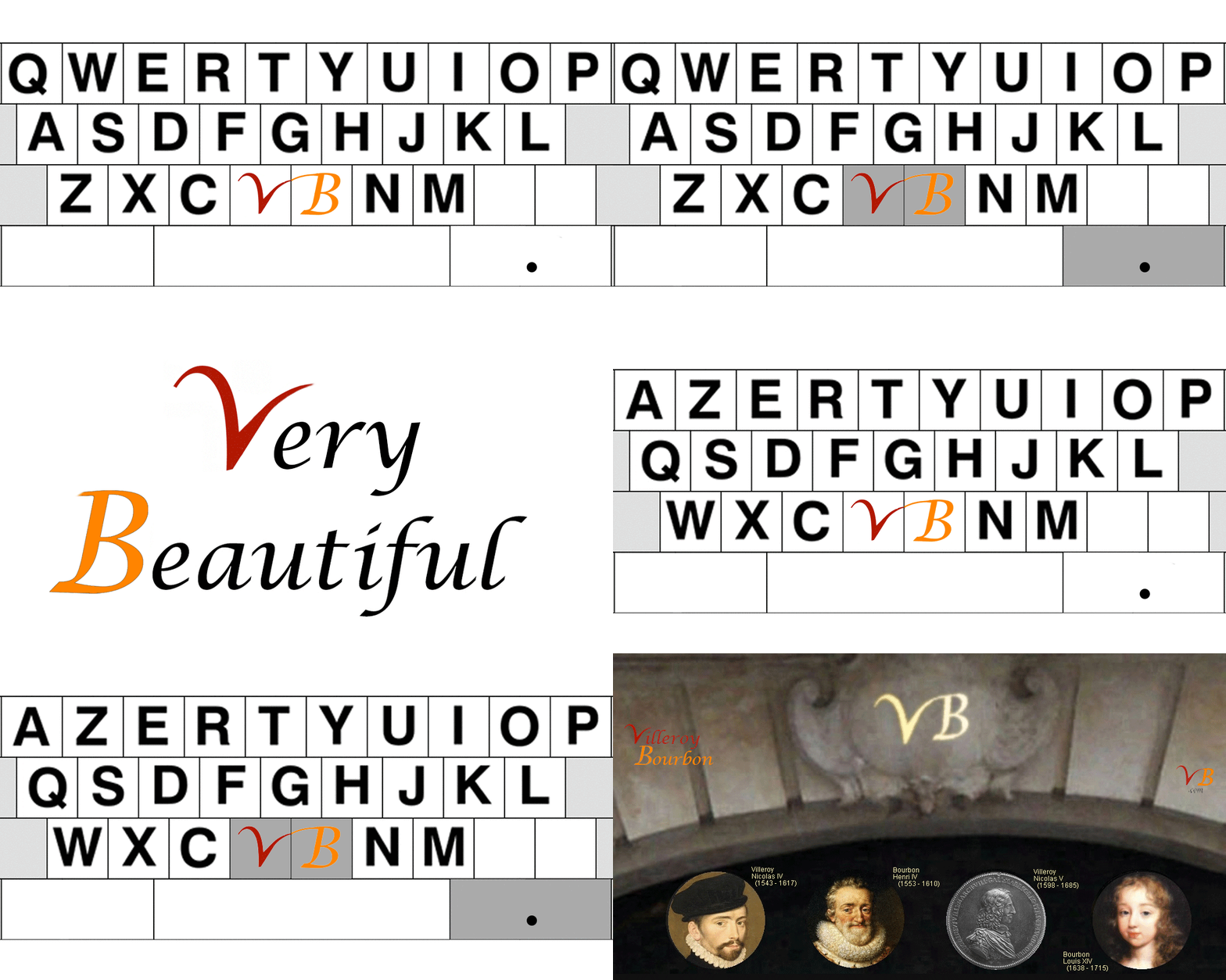
VisitKaiserslautern.com is part of an international heritage promotion initiative by VB.com (Very Beautiful / Visitors Bureau).
VB.com is a Mona Lisa of the modern tech world.
The adjacent letters "V B" right above the spacebar are ultra type-friendly.
Billions of phones are like "VB Billboards" making it so easy to connect with Kaiserslautern.
Just look at the keyboard of your phone!
Visit Branding is adopted by more and more private and official actors,
Travel Guides, Hotel Organisations, modern thinking Agencies,
official Convention and Visitors Bureau
or even private local corporations investing into the culture of a home town they love.
The city’s major football stadium and one of its highest-rated attractions.
A large horticultural and leisure park known for gardens, events, and seasonal dinosaur displays.
One of Europe’s largest Japanese gardens, featuring koi ponds, waterfalls, and a tea house.
A scenic hilltop castle ruin offering panoramic views over the region.
A historic lookout tower reached by forest trails, rewarding visitors with wide views.
A major art museum with collections spanning the 19th to 21st centuries, including Impressionism and Expressionism.
A prominent Gothic church and one of the city’s key religious landmarks.
A large sculptural fountain illustrating episodes from the city’s history.
A lively pedestrian area with cafés, shops, and historic architecture.
A central shopping mall frequently listed among the city’s top visited places.
A family-friendly zoo with diverse species and educational programs.
A green park area used for walks, events, and relaxation.
A cultural museum presenting local heritage and historical collections.
A major venue for concerts, theatre, and contemporary cultural events.
Immediate access to one of Europe’s largest forest reserves for hiking and outdoor activities.
Remnants and paths of the historic river that once flowed through the city, now mostly underground.


A historic center with medieval roots, shaped by centuries of cultural and political change.
Popular retail anchors noted in local attraction rankings.
A museum documenting the city’s long and eventful history.
A scientific garden with themed plant areas and nature trails.
Neighbour countries
Visit Europe.com — by ETC European Travel Commisson (pionneer)

Fly to Frankfurt Airport (FRA), about 87 km from Kaiserslautern.
Official or independent websites using the same iconic "Visit Style", listed by distance from Kaiserslautern — explore multiple places under the same naming convention and discover other nearby destinations.
 Visit Bad Kreuznach.com45 km · DE
 Visit Worms.de47 km · DE
 Visit Speyer.de50 km · DE
 Visit-Mannheim.de51 km · DE
 Visit-Heidelberg.com66 km · DE
 Visit Karlsruhe.com67 km · DE
 Visit Eltville.com70 km · DE
 Visit Rastatt.com72 km · DE
 Visit Mosel.de74 km · DE
 Visit Saarlouis.com75 km · DE
 Visit Merzig.com82 km · DE
 Visit Mettlach.com85 km · DE
 Visit Cochem.com89 km · DE
 Visit Pforzheim.com91 km · DE
 Visit Wasserbillig.lu96 km · LU
 Visit Grand Est.com97 km · FR
 Visit Kronberg.com97 km · DE
 Visit Strasbourg.fr97 km · FR
 Visit Bad Ems.com99 km · DE
 Visit Frankfurt Main.com99 km · DE
 Visit Perl.com100 km · DE
 Visit Schengen.lu101 km · LU
 Visit-Koblenz.com102 km · DE
 Visit Illkirch.com102 km · FR
 Visit Paris Region.com399 km · FR
 Visit Berlin.com522 km · DE
 Visit London.com604 km · UK
Internet came alive in California, the place where the "Visit Phenomenon" started in 1995. If you edit a beautiful "Visit" less than 100 km from Kaiserslautern, send an email to b@vb.com so your website can be added here.
More destinations: Global Visit List.com — over 1,000 beautiful “Visit” sites.
“Visit dot com Domains” are for Tourism People like “Crown Jewels” for a King or a Queen. Dot.com domains become extremely valuable when they have something iconic.
This domain “Visit Kaiserslautern.com” is part of the Collection of a Media company from Paris. The domain resolves in an independant Travel guide using commercial affiliate links with OTAs.
We believe in “Visit” domains because we live right in the center of a World Fashion Capital and we had the chance of being connected to Japan and California since the years internet was getting alive.
Crossing the path of several major tech pioneers and brand builders
we developped a strong sense
for iconic internet domains.
Soon this website will be enhanced with more content and technology.
If YOU should have a great project for Kaiserslautern you need to react now. You can still acquire the domain before time will be put into the development of the Visit Kaiserslautern.com site.
A simple, clean .com address is the international entrance point to any successful web project. The domain is also a great asset if you operate an interesting brand from the Kaiserslautern region — like a hotel or a tech firm.
Imagine you put your creativity into a polished “Visit Kaiserslautern.com” website — everybody in your city will love you! With a unique dot com visit domain your brand and your internet site can become a “motor” for the entire region.
The “Visit Phenomenon” started in California, where Internet was born. Today “visit style” websites outshine every other Tourism branding pattern — the absolute Gold Standard in modern destination branding.
International Tourists love consistency
— the same easy “Visit” pattern that signals glamour, tech expertise and that is just so easy to remember.
Visit already works for over 1,200 fascinating destinations.